

Life Of A Crazy White Latina
- Sep 23, 2025
- 4 min read
Updated: Nov 5, 2025
Growing up, I related more with people of color and people who immigrated to the United States versus other kids who looked like me—pale. My favorite time of the year in school was always Black History Month. I remember admiring the woman who would come to our class to speak. She gave me my first taste of chitlins. I thought it tasted amazing until I found out what it was. But that’s because animal rights has always been a passion of mine. In elementary school, I formed an instant crush on Malcolm X, and to this day, I try to buy everything about him. I have a huge biography about his life on my bookshelf, viewing it like how many see the Bible. You see, he was culturally mixed, like me. His mother was biracial and from Granada, an island in the Caribbean. My mother is from Puerto Rico, also an island in the Caribbean. And while my skin color is a pasty white hue, I found myself relating to him while experiencing my own family struggle as I aged in the South.
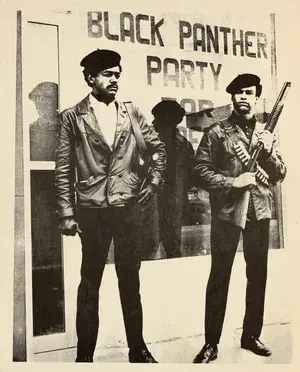
From witnessing primarily white people discriminate against my mom to people asking me, “Why does your mom speak like that” as a child, I grew a prejudice toward white people. Me, a white-looking woman with a southern accent when mad, spouting Black Panther ideology while raising my fist to the white man’s patriarchy, it is no wonder I throw people off, confusing them by my very existence. Stereotyping me as a country-loving “good girl,” I grew a habit of informing random people of my ethnicity even when they didn’t ask. And in turn, I experienced my own share of discrimination. Considering I’m whiter than white people from England—I mean, the other half of me stems from Britain after all—that says a lot about the bigotry in the South. A line a white man said to me after I told him I was half Puerto Rican will always stay with me: “Let me see the bottom of your feet… Yep, they’re black.” As he laughed to what too many people viewed as “just a joke” and told me to “get over it,” I grew angry. The memories of all the hate and prejudice my mother received echoed within my mind, as I fumed at his words. I know what truly hid within his heart, even if he had wrapped his words with a false ribbon.
There were perks to my roots, though, as I would come to learn. Living in what many would call the ghetto and even the projects, I vagabonded my way through cities in Georgia and Alabama when I was nineteen. After a friend of mine and I moved into a renovated old storage unit that was turned into apartments in Georgia, we were approached by a white cop who asked us why we were there. He didn't believe us when we told him that we lived there. He then asked us, "Why?" Who knows what was going through that Good Boy's head. But the looks we got were more insulting than any look we received from a neighbor there. Eventually, the police left us alone.
Stereotyping me as “hey white girl” and strolling up to me and my friend, asking why a couple of white kids were driving into the complex, a tall Black drug dealer who would most likely scare white urban housewives spoke to us with curiosity. I would do my Puerto Rican spiel, and my friend would talk shit about being from Michigan, and we would dramatically act insulted being compared to regular white people. This often would make people laugh, and it had made him laugh—loudly. And soon enough, we had an amazing “scary-looking” drug dealer watching out for us, like a guardian, telling everyone that we were okay and to leave us alone. It was the first time I ever felt accepted by people who actually understood me. I would wander around the storage-unit-turned-apartments every Friday, as people’s doors would always be open, like a party.

On one Friday night, I stopped at a room and saw an old woman drinking a beer by herself, staring down at tarot cards. She looked up at me and invited me in. So, without hesitation, I walked up to her and took a seat by her. We spoke about why I lived there—I was finding myself—and she told me a bit about herself. Then, she handed me a Colt 45 in a brown paper bag. I accepted it graciously and returned to walking around the tiny complex. It was peaceful, the loud music and listening to people chatter about the week, their life. I loved it there. But we only lived there for a few weeks. We were drifters, after all.
From that point on, I settled in areas that were predominantly Black, as I felt more accepted and, to be honest, safer. I remember buying a forty-dollar jacket out of a white van in Alabama while walking around with a different friend. I forget why we were walking. I think we were exploring the neighborhood. Two bulky looking Black men were selling jackets off the street. And we wandered up, drunk at noon. I jumped inside the back of the van and started browsing the rack of coats. The guys were surprised that a white girl just voluntarily jumped into their coat-store van, but then, they began helping me choose a coat and gave me their honest opinion. It felt like a fashion show, but in a van. They were two of the nicest people I ever met.
Were the jackets stolen? I don’t know, and I don’t care. I’m not a capitalist, and I value people over material things—even with my sarcastic mouth and views on overpopulation. In a world where Nazis are voted into office, I couldn't care less if the jacket I bought off the street was stolen by a person that could be lynched in a sundown town. Heck, I would buy more! Often passing out in my home with the door wide open, I had always gained a type of parental guardian. Typically, they were older people who took it upon themselves to watch out for that crazy white Latina who had just moved in next door.


